Another Year, Another Food Relief Mission: But why does Karamoja remain trapped in cycles of hunger
For now, the government's immediate priority is clear: ensuring that food reaches every vulnerable household in time, while laying the foundation for a more food-secure and climate-resilient Karamoja.
As the sun beats relentlessly across the plains of Karamoja, months of inadequate rainfall have left fields barren, harvests diminished and thousands of families facing an increasingly uncertain future.
For many households in Uganda’s north-eastern sub-region, the prolonged dry spell has translated into empty granaries, reduced incomes and growing food insecurity, forcing communities that largely depend on rain-fed agriculture to confront yet another climate-related crisis.
In response, the Government of Uganda has launched a major emergency food relief operation targeting nearly 314,000 vulnerable households across Karamoja, underscoring both the urgency of the humanitarian situation and the need for long-term investments in climate resilience.
The intervention, coordinated by the Office of the Prime Minister (OPM), will see 9,419,610 kilogrammes of maize flour and dry beans distributed to 313,987 households in 480 parishes spread across the region’s nine districts.
The relief effort brings together several government institutions, including the National Enterprise Corporation (NEC), the Uganda People’s Defence Forces (UPDF), the Uganda Prisons Service, the Uganda Police Force and local governments in what officials describe as a coordinated approach to ensure food reaches intended beneficiaries efficiently, transparently and accountably.
Responding to an Urgent Humanitarian Need
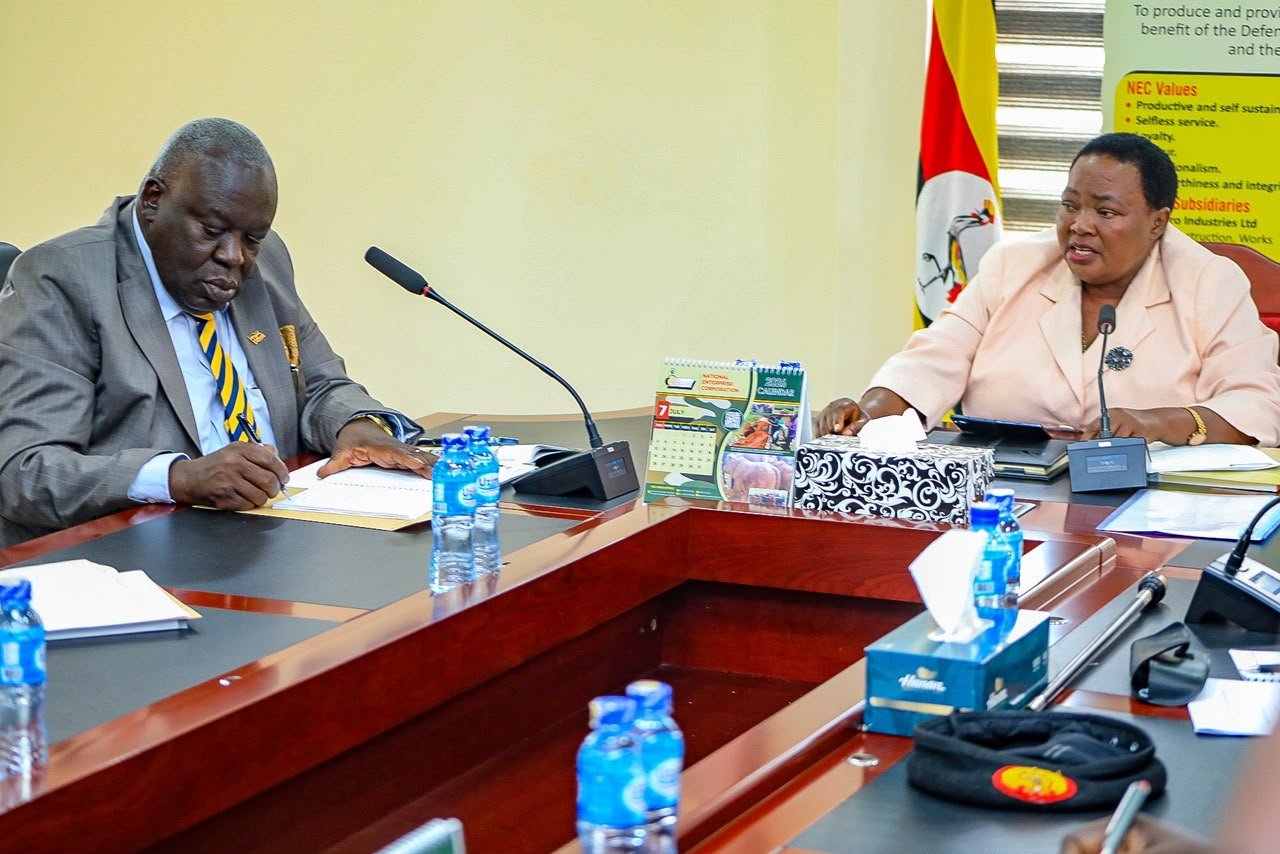
Flagging off the food consignment at the National Enterprise Corporation headquarters in Bugoloobi, Kampala, Prime Minister **Robinah Nabbanja** said the intervention reflects government’s commitment to protecting vulnerable communities from the immediate effects of climate-induced food shortages.
“The Government stands with the people of Karamoja and will continue to mobilise the necessary resources to support their recovery and build resilience against future shocks,” Nabbanja said.
Her remarks come as Karamoja continues to experience recurring climate extremes that have repeatedly disrupted livelihoods, particularly among farming and pastoral communities whose production systems remain heavily dependent on seasonal rainfall.
Although security has improved significantly in recent years, erratic weather patterns have emerged as one of the region’s biggest development challenges, threatening gains made in poverty reduction and economic recovery.
Beyond Emergency Relief
Government officials insist that while food assistance remains necessary to save lives, emergency relief alone cannot solve Karamoja’s recurring vulnerability.
Minister for Relief, Disaster Preparedness and Refugees Sam Engola appealed to political leaders, religious institutions, civil society organisations and local communities to support the distribution exercise by promoting transparency, accountability and peaceful implementation.
He emphasised that every stakeholder has a responsibility to ensure the food reaches the most vulnerable households without diversion or conflict.
The collaborative approach is intended not only to improve efficiency but also to strengthen public confidence in humanitarian interventions.
Building Resilience to Climate Shocks
The latest intervention also signals government’s growing focus on addressing the structural causes of food insecurity in Karamoja.
Alongside emergency food distribution, the Office of the Prime Minister says it will continue monitoring the region’s food security situation while implementing the recently approved Karamoja Regional Development Plan, a long-term strategy aimed at transforming livelihoods and reducing dependence on emergency relief.
The plan seeks to strengthen resilience through investments in sustainable agriculture, water resources, infrastructure, livelihood diversification and social services, enabling communities to better withstand future climate shocks.
Development experts argue that such integrated approaches are becoming increasingly important as climate change continues to intensify droughts and weather variability across Uganda’s dryland regions.
A Test of Coordination
The success of the food relief operation will largely depend on effective coordination among the multiple agencies involved and the active participation of local leaders responsible for identifying beneficiaries and overseeing distribution.
For thousands of families awaiting assistance, the arrival of maize flour and beans offers immediate relief from hunger. Yet the broader challenge remains ensuring that Karamoja is equipped to withstand future droughts without repeatedly relying on emergency interventions.
As climate variability continues to reshape agricultural production across Uganda, the Karamoja response highlights a growing policy shift, one that combines humanitarian assistance with long-term resilience-building to protect lives, livelihoods and development gains.
For now, the government’s immediate priority is clear: ensuring that food reaches every vulnerable household in time, while laying the foundation for a more food-secure and climate-resilient Karamoja.