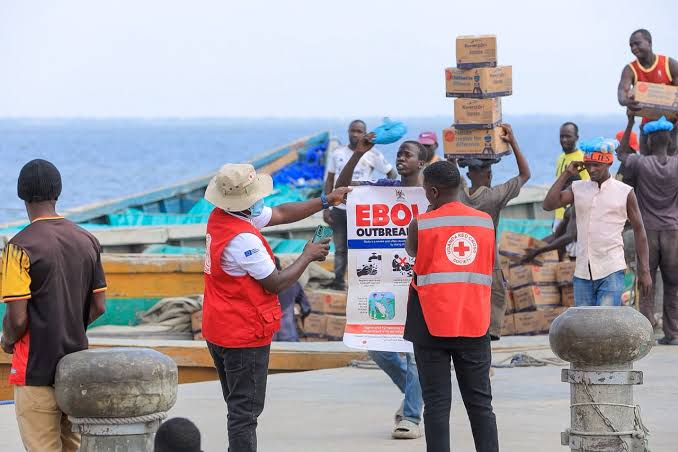
Ebola Surge Triggers Global Border Restrictions and National Ultimatums
Complacency will cost both lives and livelihoods!
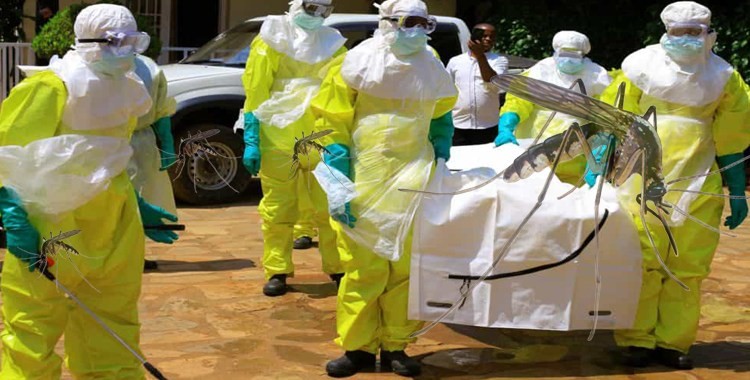
A rapidly escalating Ebola outbreak in East and Central Africa has plunged regional commerce, education, and international transit into a state of emergency. As confirmed cases breach the perimeter of Uganda’s capital and the Democratic Republic of Congo reports exponential transmission rates, global superpowers are already pulling the shutter down on travelers from the affected countries.
Health officials and business leaders are issuing a blunt, uncompromising warning to the general public: complacency at this juncture will cost both lives and livelihoods. The window to prevent a catastrophic regional lockdown is closing fast.
The true gravity of this crisis is written in the compounding numbers released by the Africa CDC, which reveal a situation accelerating at a terrifying velocity. In the Democratic Republic of Congo, a catastrophic spike has occurred in a single week: the number of suspected cases more than doubled, exploding from over four hundred to well above nine hundred. This surge left a grim trail in its wake, as suspected deaths in the DRC nearly doubled from one hundred and eighteen to two hundred and twenty, while laboratory-confirmed cases jumped sharply from thirty to one hundred and one.
The virus has refused to stay contained within Congolese borders. In Uganda, the situation shifted from a quiet concern to an active emergency over the exact same seven-day window. By May 19, the country had recorded just two confirmed cases and one death. By May 26, that confirmed case count had spiked to seven.
The epidemiological breakdown of the five new cases recorded in Uganda this past week reveals a highly dangerous vector of transmission. Two individuals had documented high-risk contact with an existing case, while a third was a Congolese national who traveled directly from the DRC after high-risk exposure.
Most alarming for metropolitan Kampala, however, are the remaining two cases: healthcare workers operating right here in the capital whose direct links to known chains of transmission remain completely unverified. Even more unsettling for the residents of Kampala is the timeline of the outbreak’s infiltration.
The first infected healthcare worker developed symptoms at least four weeks before testing positive. This significant diagnostic delay means the individual was active in the community while highly infectious, drastically increasing the probability of undetected tertiary spread.
While the US Embassy initially stated there is currently no definitive evidence of widespread community transmission, the invisible footprint of the virus is currently visible; over four hundred individuals who are predominantly concentrated in Kampala, have already been traced as contacts and placed under strict quarantine monitoring.
The economic and diplomatic fallout of the outbreak has already reverberated globally, and taking no chances, western nations are moving toward total containment. The Government of Canada officially announced sweeping temporary border measures. Effective May 27, Canada’s Minister of Health, Marjorie Michel, and the Minister of Immigration implemented a ninety-day suspension on the processing of all immigration documents for residents of the DRC, Uganda, and South Sudan.
Under Canada’s emergency mandate, even foreign nationals holding previously approved temporary resident visas, electronic travel authorizations, or permanent resident visas are barred from boarding flights to Canada. Furthermore, beginning May 30, any travelers including Canadian citizens and permanent residents who have transited through or visited these three African nations within the past twenty-one days will face aggressive, mandatory health screening and isolation protocols upon arrival.
Other countries that have imposed travel restrictions include; the United States, Thailand and Bahamas. While most countries have not yet banned Uganda outright, they are using enhanced entry screening at airports, quarantine requirements or temporary travel restrictions tied to recent travel history.
With the upcoming FIFA World Cup on the horizon, international authorities are demonstrating zero tolerance for public health risks, threatening to isolate East African commerce and professionals from the global stage.
Domestically, the government is shifting from advisory warnings to strict enforcement with the Ministry of Education having issued an ultimatum to educational institutions to strictly implement Standard Operating Procedures or face immediate closure.
Ebola is a highly lethal pathogen and its presence in a dense commercial hub like Kampala poses an existential threat to our society and economy. We cannot afford the denial, delays, or casual negligence that characterized past global health crises. Wash your hands, report symptoms instantly, cease physical greetings, and adhere strictly to the guidelines. Vigilance is no longer an option, it is a civic duty.