From Battlefield to Nation-Building: Salim Saleh salutes Otema as one of Uganda’s greatest soldiers
Gen. (Rtd) Salim Saleh, President Yoweri Museveni’s younger brother and a veteran of Uganda’s liberation struggle, paid tribute to Otema as one of the country’s greatest soldiers, thanking him for decades of service to the nation.
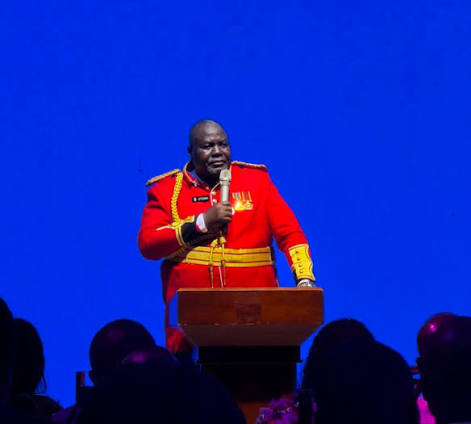
The retirement of Lt. Gen. (Rtd) Charles Awany Otema has brought into focus not only the end of a remarkable 47-year military career, but also the enduring bonds among a generation of Uganda’s commanders who helped shape the country’s security and development story.
Gen. (Rtd) Salim Saleh, President Yoweri Museveni’s younger brother and a veteran of Uganda’s liberation struggle, paid tribute to Otema as one of the country’s greatest soldiers, thanking him for decades of service to the nation.
Otema formally retired from the Uganda People’s Defence Forces (UPDF) on August 20, 2026, alongside 18 other general officers, in a major transition involving a generation of senior commanders.
From young recruit to senior commander
Otema’s military journey began when he was still a young man from what is now Nwoya District in northern Uganda.
After completing his Primary Leaving Examinations around 1979, family circumstances prevented him from pursuing further formal education. He subsequently joined the military, beginning a career that would span almost half a century.
He served during the Uganda National Liberation Front period before becoming part of the National Resistance Army (NRA), which later evolved into the UPDF.
Over the decades, Otema served in a range of operational and senior command positions, including Chief of Logistics and Engineering and General Officer Commanding the Reserve Force.
His career also took him into some of Uganda’s most challenging security operations, particularly during the conflict with the Lord’s Resistance Army in northern Uganda.
He participated in operations including Iron Fist and Lightning Thunder, as well as related operations in the Democratic Republic of Congo’s Garamba region.
For colleagues, Otema’s contribution went beyond battlefield duties.
Lt. Gen. James Mugira has praised his institutional contribution, particularly his efforts to strengthen the Reserve Force and leave it better positioned for his successor.
Saleh’s tribute
Saleh’s recognition of Otema carries particular significance given his own place in Uganda’s military history.
Saleh joined the Front for National Salvation in 1976 at the age of 16 and later trained in Mozambique before taking part in the liberation struggle.
He rose through the ranks to become a senior commander and played a key role in the National Resistance Army’s final assault on Kampala in January 1986.
He subsequently served as Army Commander between 1987 and 1989 and later became a long-serving Senior Presidential Adviser on Defence and Security.
Through Operation Wealth Creation, Saleh has also been closely associated with government efforts to link security, agriculture, household incomes and socio-economic transformation.
His approach has increasingly emphasised the connection between stability and development, including efforts to rebuild northern Uganda after years of conflict.
It is against this background that his tribute to Otema assumes a wider meaning.
From military service to civilian transformation
Otema’s retirement has already begun a new chapter rooted in his home region.
After leaving active military service, he returned to his ancestral home in Tangi village, Purongo Sub-county, Nwoya District, where elders performed traditional cleansing rituals as part of his reintegration into community life.
The former commander has said he intends to focus on economic transformation, with interests including farming, hospitality, animal husbandry and wealth creation.
His post-military ambitions have also brought him into discussions with Saleh about development initiatives in northern Uganda.
Otema has publicly referred to discussions concerning a possible role as a provincial governor overseeing government programmes in the region.
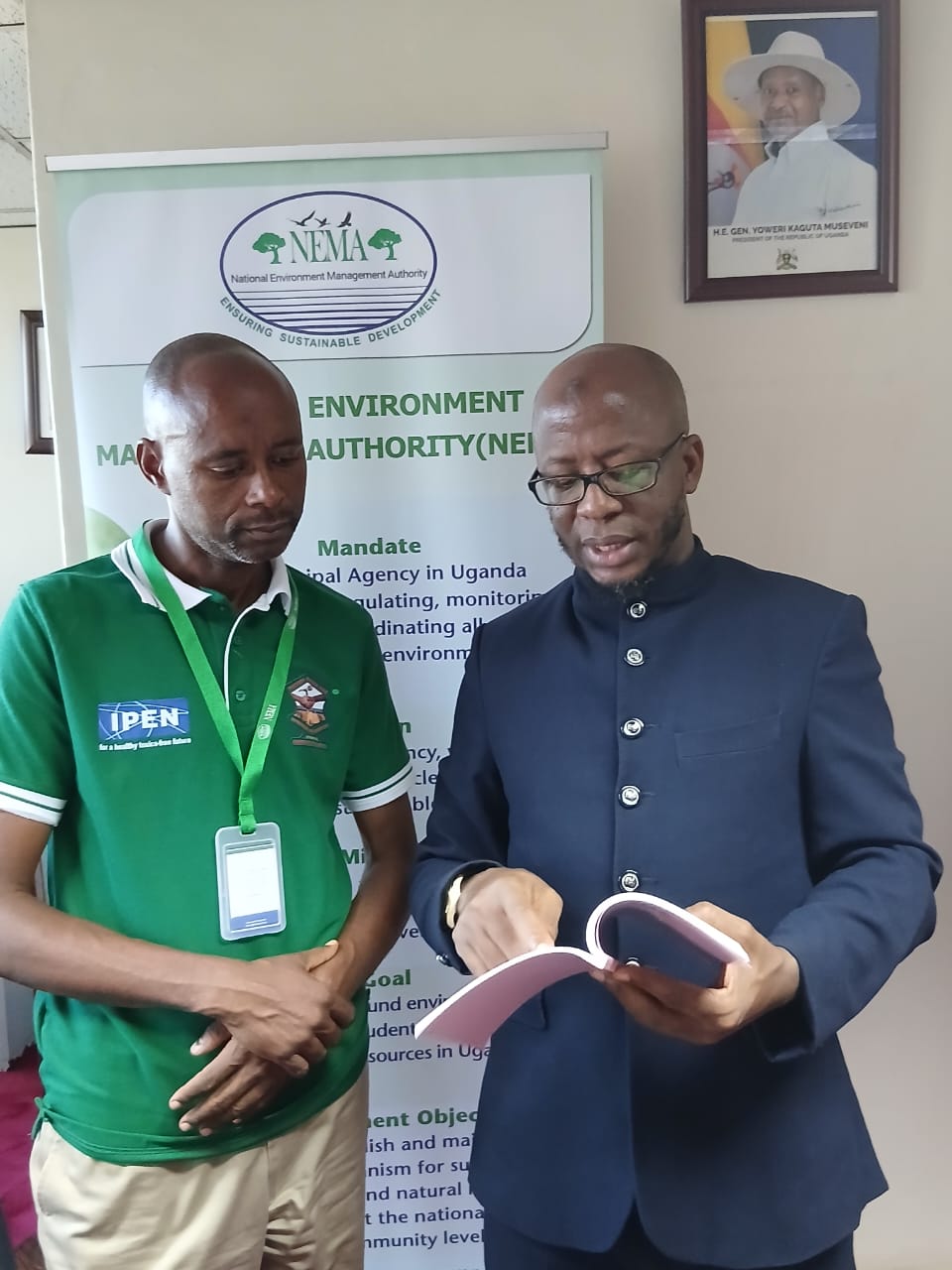
He also received documentation from Saleh outlining investment opportunities under an Acholi Investment Plan.
The exchanges point to a possible transition from military service to another form of national service—this time centred on investment, agriculture, livelihoods and regional development.
A changing generation
Otema’s retirement is part of a broader generational transition within the UPDF.
President Museveni, as Commander-in-Chief, presided over the formal send-off of the 19 general officers and praised the outgoing commanders for their contribution to peace, security, patriotism and national development.
Otema formally handed over command of the Reserve Force to Maj. Gen. Joseph Ssemwanga.
The change also highlighted the importance of mentorship, with senior military officers stressing the need for outgoing commanders to prepare and guide their successors to preserve institutional knowledge.
For the UPDF, the transition is therefore about more than retirement. It is also about transferring experience from one generation of commanders to another.
Two paths, one national story
Saleh and Otema represent different but complementary strands of Uganda’s post-1986 military and development narrative.
Saleh is the strategist and veteran commander who moved from battlefield leadership into long-term defence advisory work and the coordination of a major socio-economic transformation programme.
Otema represents the professional soldier whose career was built around logistics, operations, institutional leadership and service in some of the country’s most difficult security environments.
Yet their paths have converged around northern Uganda, a region where military stability and economic recovery have been closely intertwined.
Saleh’s description of Otema as one of Uganda’s greatest soldiers therefore goes beyond a personal commendation. It reflects recognition from one veteran of the liberation generation to another officer whose career carried the country through successive phases of conflict, stabilisation and institution-building.
As Otema moves into civilian life, his focus on economic transformation offers a continuation of that service in a different form.
His retirement closes one chapter of nearly five decades in uniform, but it may also open another—one in which the discipline, experience and networks acquired through military service are redirected towards farming, investment, livelihoods and development.
In that sense, the farewell to Otema is not simply an ending.
It is a reminder of a broader tradition in Uganda’s military history: that service to the country can evolve with time, moving from the battlefield to the boardroom, the farm and the community, while retaining the same underlying objective, the pursuit of a more secure and prosperous Uganda.