Uganda’s UGX8.4 trillion arrears could take 48 years to clear at current funding levels
Domestic arrears, unpaid obligations for goods supplied, services rendered, and works completed for government, have long been cited by businesses as a major constraint on private sector cash flow.
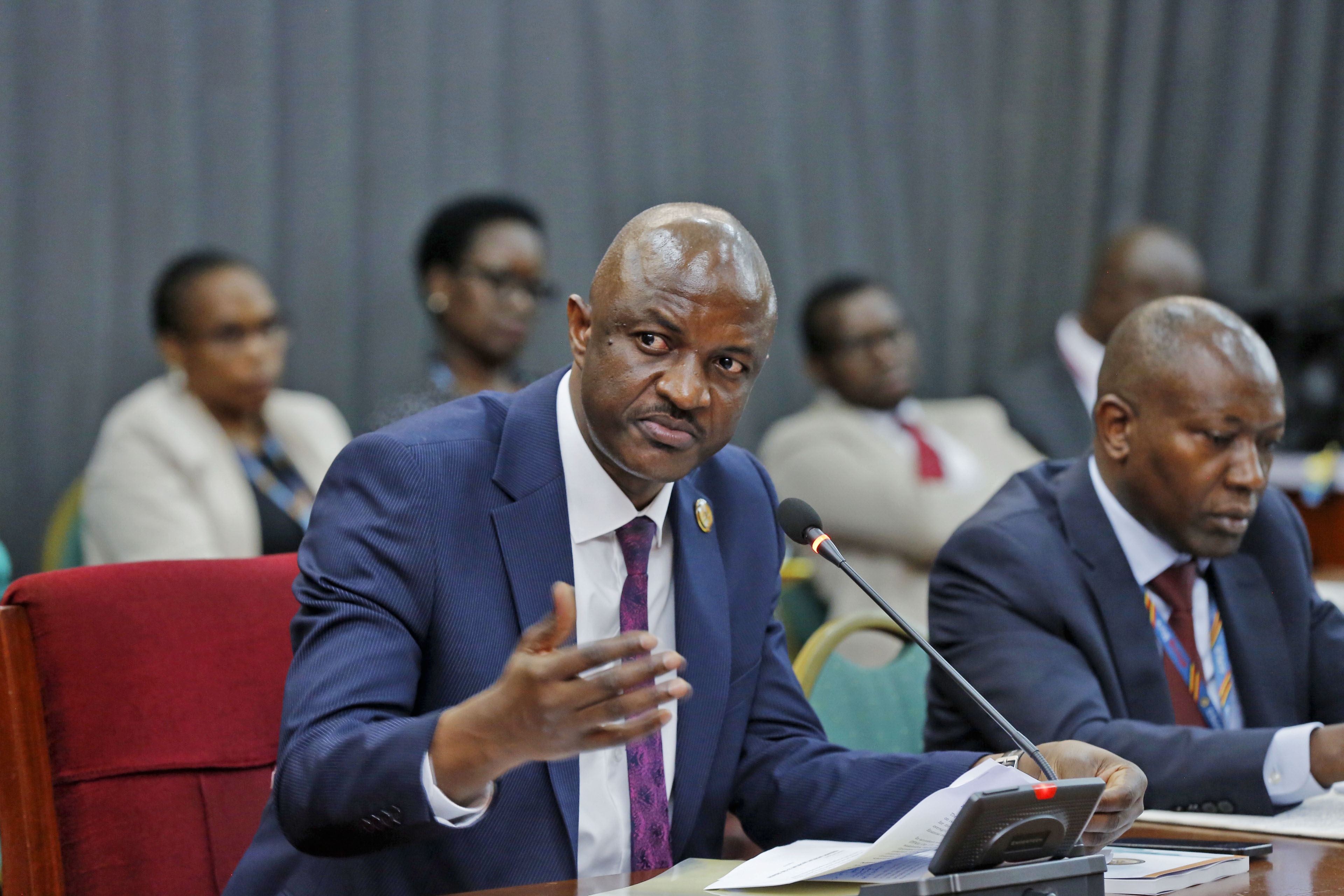
Uganda could take more than four decades to clear its mounting domestic arrears if the government continues allocating about UGX200 billion annually for the purpose, Members of Parliament have warned, raising concerns about the impact on private sector liquidity and economic growth.
The issue emerged during a meeting between the Parliament’s Public Accounts Committee and officials from the Ministry of Finance, Planning and Economic Development while reviewing the December 2025 report by the Office of the Auditor General. The report estimated Uganda’s domestic arrears at approximately UGX8.4 trillion.
During the session, Basil Bataringaya, Member of Parliament for Kashari North, calculated that at the current allocation rate of UGX200 billion per year, government would take roughly 48 years to clear arrears valued at about UGX9.6 trillion.
“I have computed it is 48 years. UGX200 billion per year against UGX9.6 trillion means 48 years. Yet the medium-term framework is only five years,” Bataringaya said.
He warned that the estimate does not account for the continuous accumulation of new arrears, meaning the debt could take even longer to settle.
“The domestic arrears will be growing; they will not remain static. At the rate at which we have programmed to pay, we shall cover it in 48 years,” he added.
Domestic arrears, unpaid obligations for goods supplied, services rendered, and works completed for government, have long been cited by businesses as a major constraint on private sector cash flow.
The debate was triggered by concerns raised by Gorreth Namugga, Vice Chairperson of the Public Accounts Committee, who asked government to clarify its commitment to settling outstanding payments owed to contractors and suppliers.
Responding to the committee, Ramathan Ggoobi, Secretary to the Treasury, said government has earmarked UGX200 billion in the proposed 2026/27 national budget to clear domestic arrears. However, this represents a sharp drop from the UGX1.4 trillion allocated for the same purpose in the 2025/26 financial year.
Ggoobi noted that the government is undertaking a verification exercise to confirm the authenticity of the arrears reported by the Auditor General.
“I requested the Auditor General to verify these arrears. The results are coming in and we are saving a substantial amount of money because some claims have no concrete evidence that goods or services were supplied to government,” he said.
According to Ggoobi, the verification exercise could significantly reduce the actual arrears stock once illegitimate claims are eliminated.
He added that government plans to begin releasing funds next quarter to settle claims that have been validated as legitimate.
“We have a good plan and starting next quarter we are going to release money to pay those who have been certified as legitimate arrears,” he said.
However, MPs remained skeptical about the adequacy of the current allocation. Namugga pointed out that UGX200 billion has consistently been budgeted for arrears clearance over the past five years, raising questions about the government’s ability to reduce the growing stock of unpaid obligations.
“If you look at the trend for the last five years, UGX200 billion has been your allocation most of the time. Yet the validated arrears stand at around UGX8 to UGX9 trillion. Which miracle are you going to perform?” she asked.
Namugga warned that delayed payments are placing severe pressure on businesses that rely on government contracts.
“At the end of the day, you are seriously killing the private sector,” she said.
In response, Ggoobi explained that the UGX200 billion represents the baseline allocation currently available within government’s fiscal space.
“If we manage to get new resources, clearing arrears is a priority. But if we fail to get additional resources, we shall pay UGX200 billion because we cannot pay money we do not have,” he said.
He also disputed the UGX9.6 trillion arrears figure cited during the meeting, saying updated verification results would soon provide a more accurate estimate.
“That number you have is not correct. A new figure will be announced soon by the Auditor General,” Ggoobi said.
Economic implications
Economists warn that prolonged delays in clearing domestic arrears can weaken business confidence, slow private sector investment, and disrupt supply chains, particularly for small and medium enterprises that depend heavily on government contracts.
The issue has increasingly become a fiscal policy challenge for Uganda, balancing the need to settle legacy debts while maintaining budgetary discipline amid growing public expenditure demands.
As Parliament scrutinizes the upcoming national budget, the pace and strategy for clearing domestic arrears is expected to remain a central debate, with lawmakers pushing for faster settlement to ease financial pressure on the private sector and restore trust in government procurement systems.