Youth urged to embrace vocational training for oil and gas sector opportunities
Rubondo articulated that vocational training is not merely beneficial but fundamentally crucial for the successful development of the oil and gas sector.

By George Niyonzima
Ernest Rubondo, the Executive Director of the Petroleum Authority of Uganda (PAU), has issued a strong call to action, urging the nation’s youth to actively pursue vocational training to equip themselves with the essential skills needed to capitalize on the burgeoning opportunities within Uganda’s oil and gas sector.
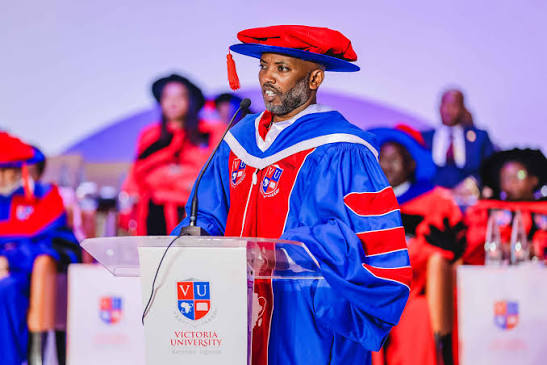
Speaking at the graduation ceremony of over 781 students from the Uganda Petroleum Institute Kigumba (UPIK) in Kiryandongo district last evening, Rubondo emphasized the critical juncture Uganda stands at, with the nation gearing up for its first oil production in 2026 and subsequent development phases.
He stressed the imperative of ensuring that young Ugandans are adequately prepared with the knowledge, skills, and confidence to actively participate and benefit from this vital industry.
The graduating class at UPIK received diplomas and certificates in a diverse range of disciplines, including Upstream Petroleum Operations, Downstream Petroleum Operations, Health, Safety, and Environment (HSE), as well as Welding and Metal Fabrication.
Notably, this comprehensive training initiative was generously sponsored by CNOOC Uganda Limited, currently spearheading the Kingfisher Oil Development Area in Buhuka, Kyangwali Sub-County, Kikuube District.
Rubondo articulated that vocational training is not merely beneficial but fundamentally crucial for the successful development of the oil and gas sector. He explained that these programs provide the specialized technical and practical expertise demanded by complex tasks inherent in exploration, drilling, and processing, alongside crucial support roles in sectors like construction and logistics.
He further highlighted that a well-embraced vocational training strategy will play a pivotal role in bridging the existing skills gap, fostering the development of a local workforce capable of securing international job opportunities, and ultimately safeguarding a competent and safe working environment.
The PAU Executive Director also pointed out that such training enhances employee performance, engagement, and career progression, ensuring that local communities are direct beneficiaries of the economic prosperity generated by the sector.
Rubondo lauded UPIK as a burgeoning “Center of Excellence” for oil and gas training, recognizing its established capacity to deliver demand-driven training and skilling opportunities.
He added that the institute has evolved into a regional leader in technical training, offering hands-on, industry-standard competencies that align with international benchmarks.
He confirmed that critical technicians who will manage production phase activities have already been trained at UPIK, including 200 Ugandans through the Tilenga Academy, 140 through the EACOP Academy, and 50 for the Kingfisher Field Development under CNOOC.
The oil and gas sector, Rubondo observed, has already spurred significant investment in Uganda, particularly in the training of its citizens. He revealed that approximately USD 10 million has been invested to date, enabling the training and international certification of over 14,000 Ugandan technicians in various technical disciplines such as Scaffolding, HSE, Welding, and Heavy Equipment Operation.
Echoing Rubondo’s sentiments, Dr. Kedrace Turyagenda, the Permanent Secretary in the Ministry of Education and Sports, stated that vocational training offers a clear pathway to new and advanced career opportunities, translating into improved wages and long-term job security.
He underscored that the discovery of oil and gas resources has significantly enhanced Uganda’s prospects for economic development, presenting vast opportunities for Ugandans, Ugandan companies, and registered entities to actively participate and derive substantial benefits from the sector.
Ma Jin, Head of the Legal and Commercial Department at CNOOC Uganda Limited, affirmed that it is CNOOC’s mandate to ensure Ugandans are thoroughly prepared to engage with and benefit from the opportunities presented by the oil and gas sector.
Bernard Ongodia, Principal of Uganda Petroleum Institute Kigumba (UPIK), concluded by stating that the institute has proactively expanded its training portfolio to directly address national content needs, ensuring that its students and graduates are exceptionally well-equipped to meet the rigorous demands of the oil and gas industry.