
Off-grid solar market hits 149 million users, generates $28 billion in income and savings, but $11.4 billion needed to unlock growth
The report shows that the number of users of solar home systems, water pumps, generators, lanterns and other off-grid solar products rose from 118 million in 2023 to 149 million in 2025.
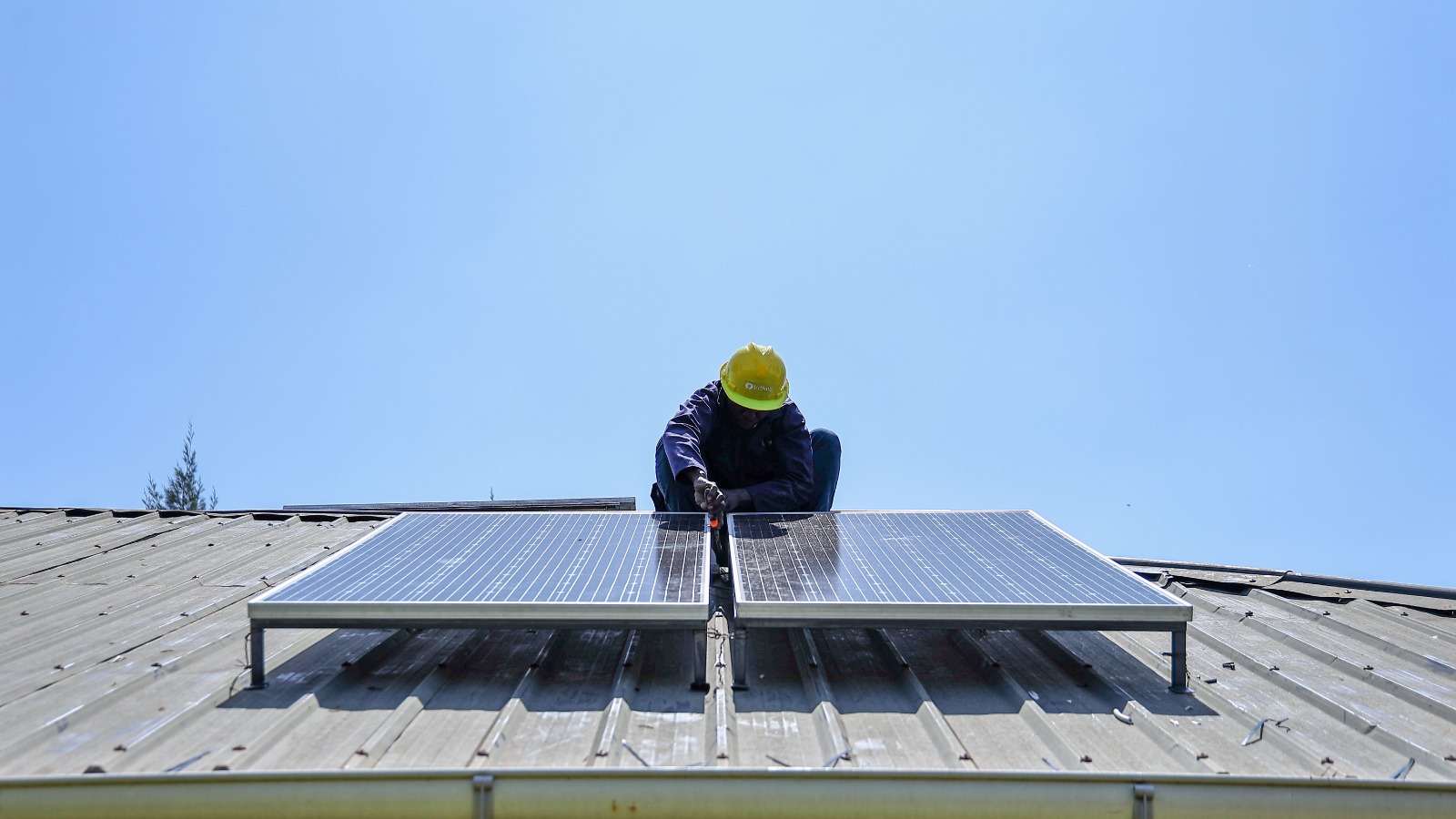
The number of people using off-grid solar products worldwide has increased by 26% in two years to 149 million, highlighting the growing role of decentralised renewable energy in expanding electricity access and supporting livelihoods.
The growth is documented in the Off-Grid Solar Market Trends Report 2026, released on October 27 by the World Bank Group’s Energy Sector Management Assistance Program (ESMAP) and GOGLA, the global association for the off-grid solar industry, at the Global Off-Grid Solar Forum and Expo in Kigali, Rwanda.
The report shows that the number of users of solar home systems, water pumps, generators, lanterns and other off-grid solar products rose from 118 million in 2023 to 149 million in 2025.
Beyond providing lighting, off-grid solar is increasingly powering farms, small businesses, schools and health facilities, particularly in communities where extending the national electricity grid remains expensive or technically challenging.
The report identifies off-grid solar as the least-cost electricity solution for at least 398 million people without access to electricity, positioning the technology as a critical component of global efforts to close the energy access gap.
It argues that off-grid solar should increasingly be treated as essential energy infrastructure rather than merely a temporary solution awaiting grid connection.
“Off-grid solar has proven it can deliver at scale, through shocks, and in places the grid has not reached,” said Sarah Malm, GOGLA’s executive director.
She said the technology was irrigating farms, keeping clinics open and powering businesses that sustain rural economies, but warned that financing had not kept pace with the sector’s expanding role.
Malm called on governments, investors and development partners to recognise off-grid solar as infrastructure and increase financing to accelerate electricity access.
Financing gap threatens expansion
Despite its relatively low cost, affordability remains a major obstacle to wider adoption.
The report estimates that only one in three households without electricity can afford an entry-level solar home system through pay-as-you-go financing, while another third can afford one only with difficulty.
The remaining households require additional support to access the technology.
To connect hundreds of millions of people to reliable electricity by 2030, the report estimates that the off-grid solar sector will require approximately $11.4 billion between 2027 and 2030.
The financing requirement includes about $1.3 billion annually in grants and affordability subsidies, alongside $1.6 billion annually in equity, debt and receivables financing.
The report recommends measures such as value-added tax exemptions, import duty waivers and targeted subsidies to lower consumer costs, encourage investment and expand access among underserved populations.
It also calls for stronger public-private partnerships to mobilise capital and support the expansion of decentralised renewable energy systems.
Solar delivers economic benefits
The report highlights the contribution of off-grid solar to income generation, employment and enterprise development.
An estimated 7.4 million people use off-grid solar to power microenterprises or support income-generating activities in sectors such as agriculture, retail and services.
Over the past 15 years, off-grid solar products have generated an estimated $28 billion in additional income and savings for customers.
Employment in the surveyed off-grid solar market has also grown, reaching 219,000 people, an increase of 29% over the past two years. Most work as agents and technicians serving communities where the products are sold and maintained.
The technology has also demonstrated durability, with 95% of surveyed customers reporting that their solar home systems remained functional four or more years after purchase.
These findings suggest that off-grid solar can provide sustained electricity access while supporting local employment and economic activity.
Role in Africa’s electricity ambitions
The report comes as African countries advance Mission 300, an initiative led by the World Bank Group and the African Development Bank to connect 300 million people to electricity across sub-Saharan Africa by 2030.
Distributed renewable energy, including off-grid solar, is expected to play a significant role in achieving the target, particularly in remote communities where conventional grid expansion may be costly.
According to the report, 80% of the 35 National Energy Compacts developed under Mission 300 include distributed renewable energy in their electricity connection targets.
World Bank Group commitments to off-grid solar reached $974 million in financial years 2025–26, matching the level recorded in 2023–24, making the institution the largest source of public funding for the sector, according to the report.
Fanny Missfeldt-Ringius, ESMAP manager at the World Bank Group, said off-grid solar had evolved from a basic lighting solution into a critical source of electricity for hundreds of millions of people.
She said the institution remained committed to mobilising private capital and supporting governments to deliver sustainable electricity access through national energy plans and energy compacts.
The report concludes that unlocking the sector’s potential will depend on sustained investment, policies that improve affordability and financing mechanisms that enable businesses to expand into underserved markets.
Although the estimated $11.4 billion requirement represents a relatively small share of the $3 trillion to $5 trillion in average annual energy transition investment needed globally by 2030, closing the financing gap will be essential to accelerating electricity access in communities that remain beyond the reach of conventional power infrastructure.