PDM Under the Microscope: Auditor General flags gaps as trillions remain unrecovered
Speaker Among pointed to this disconnect, noting that audit teams play a critical role in identifying gaps such as delayed disbursements, double payments, and misalignment of parish priorities, issues that can only be uncovered through rigorous oversight.
When Uganda launched the Parish Development Model (PDM), it was framed as a bold last-mile intervention, a grassroots solution designed to lift millions of households from subsistence into the money economy. Three years on, the programme has delivered pockets of success, but a sobering assessment by the Auditor General suggests that serious structural weaknesses continue to undermine its impact.
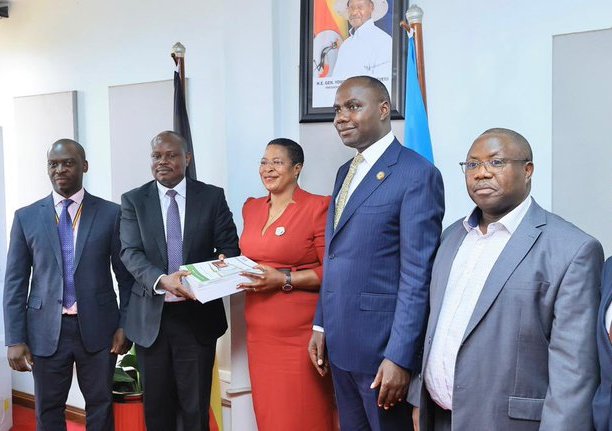
Presenting the December 2025 Annual Audit Report to Parliament on January 29, 2026, Auditor General Edward Akol revealed that only UGX 9.34 billion has so far been recovered from 18,105 beneficiaries across 709 SACCOs in 30 local governments, despite the government having released a cumulative UGX 3.258 trillion to 10,589 PDM SACCOs nationwide.
The recovered amount represents a fraction of the funds disbursed under the programme and raises difficult questions about recovery preparedness, accountability, and sustainability of a model heavily reliant on revolving funds.
Low Recovery, Weak Systems
According to Akol, while voluntary recovery efforts had begun among some beneficiaries by December 2022, there was no evidence of systematic preparedness for recovery across all local governments.
“I noted that of the beneficiaries who received PRF by December 2022, a total of 18,105 beneficiaries in 709 SACCOs in 30 LGs had commenced voluntary recovery, and a sum of UGX 9.340 billion had been recovered,” Akol told Parliament. “However, there was no evidence of preparedness for recovery in all LGs.”
The Auditor General’s findings point to a fundamental contradiction at the heart of PDM implementation: funds are being released at scale, yet the mechanisms required to track, recover, and recycle them remain underdeveloped or inconsistently applied.
This concern is compounded by the fact that only 84 percent (UGX 2.75 trillion) of the total funds released had been disbursed to households by the end of FY 2024/25. About UGX 508.6 billion (16 percent) remains undisbursed, locked within the system even as demand at the parish level remains high.
Leakages and Governance Risks
Beyond slow recovery, the audit paints a troubling picture of governance failures. Akol highlighted multiple challenges affecting PDM implementation, including funding of non-existent (ghost) projects, delays in household disbursements, implementation of ineligible projects, diversion of funds, and duplicate beneficiaries.
These weaknesses strike at the credibility of the programme and expose systemic vulnerabilities at the parish and local government levels, the very units meant to anchor PDM’s success.
For a programme premised on community ownership and local oversight, such lapses suggest that political goodwill alone is insufficient without strong administrative controls and continuous audit scrutiny.
Speaker Demands a Firmer Hand
Speaker of Parliament Anita Among did not mince words in her response, urging the Auditor General to apply what she termed a “whip” in auditing PDM funds to ensure they reach the intended beneficiaries.
“As we appropriate monies, we want so many people out there, like the PDM, who want the money to reach the final user,” Among said. “But the problem we have is the diversion of these monies. The problem we have is the money does not go to the intended beneficiary.”
Her remarks reflect a growing frustration within Parliament that repeated audit findings are not translating into decisive corrective action at implementation level.
“We cannot appropriate the money, and then we have 70 percent of the people who are rich, and then the 30 percent cannot get anything,” she added. “We want you to make sure that this money is reached to the right people.”
Politics, Performance and the PDM Vote
Perhaps most revealing was the Speaker’s candid admission that the PDM has had direct political consequences. Among defended her firm stance by linking the programme’s success stories to the ruling National Resistance Movement’s electoral performance in the just concluded general elections.
“By the way, our votes, most of the votes we got, were because of the people who got the money rightfully, PDM money,” she said.
This political dimension underscores why the programme remains both sensitive and strategically important. For households that accessed funds and invested productively, PDM has delivered tangible change. But for those excluded due to delays, duplication, or diversion, the programme risks reinforcing inequality rather than reducing it.
A Model at a Crossroads
Analysts note that the PDM is not failing for lack of resources but because of weak alignment between policy ambition and implementation capacity. The persistence of duplicate beneficiaries and misaligned parish priorities suggests that data integrity, beneficiary verification, and local planning remain weak.
Speaker Among pointed to this disconnect, noting that audit teams play a critical role in identifying gaps such as delayed disbursements, double payments, and misalignment of parish priorities, issues that can only be uncovered through rigorous oversight.
The Way Forward
As the government continues to invest trillions into the PDM, the audit findings serve as a warning: without stronger recovery frameworks, real-time monitoring, and consequences for abuse, the programme’s long-term sustainability is at risk.
The challenge now is not whether PDM should continue, political and social consensus suggests it will, but whether implementation systems can be tightened fast enough to protect public funds, restore confidence, and ensure that Uganda’s most vulnerable households truly benefit.
For a programme that has already shaped political outcomes, the next phase of PDM may well determine not just economic inclusion, but public trust in state-led development itself.