Who declares a 13-year-old a failure? Victoria University’s Dr Muganga questions exam-centred education system
Muganga commended the government and the Ministry of Education and Sports for investing in Competency Based Education (CBE), describing it as one of the most important reforms introduced in Uganda’s education sector, despite existing implementation challenges.

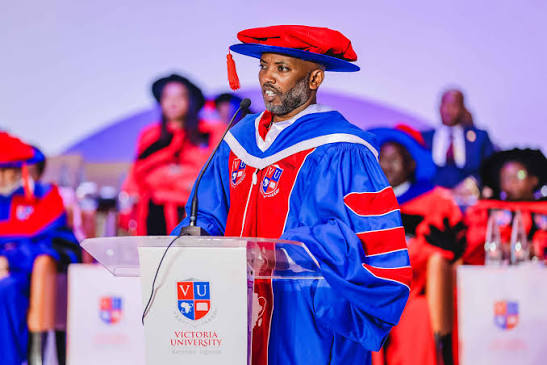
Victoria University Vice Chancellor Dr Lawrence Muganga has questioned the practice of labelling children as failures based on national examination results, arguing that Uganda’s education system has for years prioritised memorisation over meaningful learning.
Speaking in the wake of the release of national examination results on NTV Uganda’s Morning At NTV show, Dr Muganga said excessive public attention given to exams sat by 12- and 13-year-olds risks unfairly defining young learners at an early age.
“The release of examination results should not be news,” Muganga said. “It should be normal for every learner to sit an exam or undertake an assessment. But who declares a 13-year-old a failure?”
He noted that for decades, assessments in Uganda largely measured recall and memorisation, rewarding learners for reproducing content rather than demonstrating understanding, creativity, or problem-solving skills.
However, Muganga acknowledged that recent education reforms, particularly the introduction of the Competency Based Curriculum (CBC), are gradually shifting the focus of assessment. He said that at O-Level, about 20 per cent of examinations already reflect competency-based assessment, with similar changes taking place at primary level.
“The playing field is slowly becoming more level,” he said, adding that the traditional system where learners memorised everything taught in class and reproduced it in examinations is beginning to fade.
Muganga commended the government and the Ministry of Education and Sports for investing in Competency Based Education (CBE), describing it as one of the most important reforms introduced in Uganda’s education sector, despite existing implementation challenges.
He acknowledged that many teachers are not yet fully trained to deliver the curriculum as designed, but stressed that if properly implemented, CBE has the potential to make education more inclusive and relevant.
According to Muganga, competency-based education recognises that learners are different and should not be forced to progress at the same pace. Unlike the previous system where time was fixed and failure was determined by strict timelines, CBE allows learners to master required competencies at their own pace before advancing.
“This is particularly important for learners with disabilities or different learning needs, who were previously expected to sit the same exams, in the same way, within the same time as everyone else,” he said.
Muganga added that the new curriculum, if implemented as intended, aims to produce learners who can apply knowledge practically by engaging their hands, hearts, and heads.
“It is no longer about what you can recall, but what you can do with what you know,” he said, noting that a learner who scores moderate marks can still be an effective problem solver.
He called for a shift in mindset among parents, educators, and the public, urging them to stop defining children solely by examination results.
“Meaningful education is about the ability to solve problems, not just writing answers on paper,” Muganga said.