Former MP Ssimbwa wants section 67A of Anti Corruption (Amendment) Act 2015 operationalized to confiscate and auction assets of corrupt officials, including those of Anita Among
A former MP who pushed through Uganda's toughest asset-confiscation law is now petitioning President Museveni to compel the Chief Justice to activate the rules that would give it teeth.
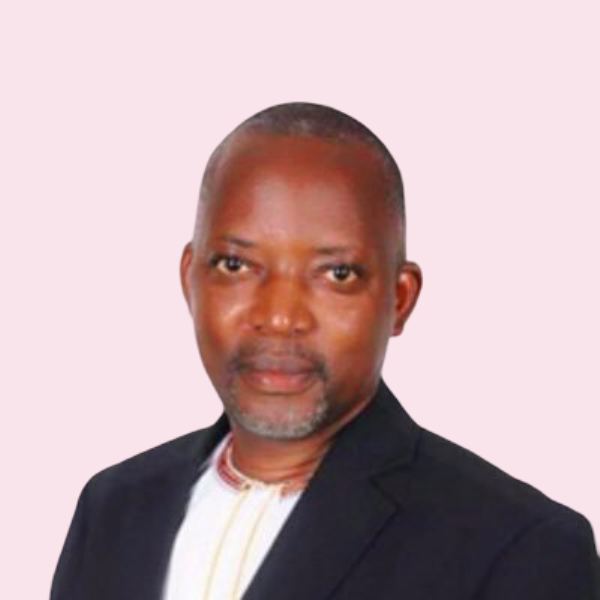
When former Member of Parliament Ssimbwa John steered his Private Member’s Bill through Parliament in 2015, he believed he had handed the Ugandan state one of its most powerful weapons against corruption: a law that would strip convicted officials of the property they had acquired through graft.
Eleven years later, the Anti-Corruption (Amendment) Act 2015, which President Yoweri Museveni signed on 15 October 2015, has yet to deliver on its central promise. The critical mechanism, mandatory confiscation and forfeiture of a convicted person’s assets, remains inoperable because no sitting Chief Justice has ever issued the subsidiary rules required to make it work.
Now Ssimbwa, writing directly to State House Entebbe on 18 May 2026, is calling on Museveni to personally intervene, arguing that only presidential pressure will move the Judiciary to act with urgency.
“If they get to know that a conviction would automatically lead to the confiscation and forfeiture of their property to the government, they would think twice before getting involved in corruption,” Ssimbwa, former MP Makindye East, stated.
The Law and Its Gap
Section 67A of the 2015 Amendment Act tasks the Chief Justice with gazetted rules to govern how Confiscation Orders and Recovery Orders are applied. It specifies the duties of court-appointed Trustees and Receivers who would manage or dispose of seized assets on behalf of the government.
Without those rules, prosecutors have no operational framework to pursue asset recovery even when they secure convictions. Ssimbwa argues that this single omission has blunted the deterrent effect of an otherwise far-reaching statute. “Many of those who steal public funds get motivated because they know that even when they get convicted and sentenced, they would still find and enjoy their loot after serving their custodial sentences,” he writes.
The framers of the original Bill had included the procedural detail in their draft, but Parliament chose to vest rule-making power in the Chief Justice instead, reasoning that operational rules should be flexible enough to adapt to changing circumstances without requiring fresh legislation. Ssimbwa accepted that logic at the time. His frustration today is that the discretion granted to the judiciary has been exercised as inaction.
The key provisions at stake include Section 67A of the Anti-Corruption (Amendment) Act 2015, which requires the Chief Justice to formulate rules governing Confiscation and Recovery Orders; Sections 67B and 67C, which authorize Uganda to enter reciprocity agreements and treaties with foreign states for cross-border recovery of assets acquired through corruption; Section 21A, which criminalises “dealing with suspect property” and can be used to prosecute accomplices involved in concealing or transferring illicit wealth; and provisions on Restraint Orders, which empower courts to freeze bank accounts and prevent suspects from transferring, disposing of or concealing property under investigation.
A Positive Signal, But Not Enough
There is, for the first time, a degree of cautious optimism. Ssimbwa acknowledges that current Chief Justice Dr. Flavian Zeija has responded positively to prior correspondence, forwarding the matter to the Principal Judge, who also chairs the Judiciary Law Reform Committee, with instructions to prioritise the implementation of Section 67A.
But Ssimbwa is unwilling to wait for institutional momentum alone. “We believe, Sir, that it is only you whose voice can cause the formulation of these rules,” he tells the President, even while crediting Chief Justice Zeija for what he describes as a “proactive” gesture.
The petition arrives at a politically charged moment. Museveni’s new term has been defined, in part, by a high-profile accountability push that included action against former Speaker of Parliament Anita Among, widely seen by Ugandans as an untouchable figure given her dual role as NRM’s Second National Vice Chairman. Ssimbwa references this directly, suggesting the President’s credibility on the anti-graft agenda now depends on follow-through at the institutional level.
Beyond Borders
The former MP also draws attention to provisions in the Act that have received even less attention than the confiscation rules. Sections 67B and 67C empower Uganda to negotiate reciprocal enforcement treaties with other states, meaning assets spirited abroad by convicted officials could, in theory, be traced, frozen and repatriated.
“Even where those stealing public funds decide to invest or hide their loot outside Uganda, this law has provisions that can be applied to confiscate or recover those properties,” Ssimbwa writes. No such treaty framework has yet been activated.
The Karamoja Connection
The petition also revisits the contentious Karamoja Iron Sheets scandal, one of Uganda’s most prominent recent corruption cases, in which prosecutions faltered. Ssimbwa contends that Section 21A, which targets those who “deal with suspect property,” could be deployed to re-energise that prosecution and reach the alleged accomplices who helped conceal, transfer or receive proceeds on behalf of the principal suspects.
“During the earlier prosecution, the suspects managed to jump off the hook because the prosecuting agencies used weaker sections of the law,” he argues, urging investigators to revisit the charges using the more targeted provision.
Making Corruption A ‘Risky Venture’
The phrase Ssimbwa returns to repeatedly, “a risky venture”, is both a slogan and a policy theory. His argument is that Uganda’s anti-corruption effort has concentrated too heavily on prosecution and imprisonment, neglecting the economic calculus that motivates graft in the first place. A public official who calculates that even a successful prosecution leaves their family’s wealth intact has little material reason to fear the law.
Mandatory confiscation, cross-border recovery treaties, accomplice liability and asset-freezing orders together, he argues, would transform that calculation. The deterrence, he suggests, would begin even before cases concluded: “the mere announcement by the Judiciary of the formulation of these rules will threaten those wishing to get involved in corrupt practices.”
Whether President Museveni will lend his voice to the cause, and whether that voice will be enough to convert the Chief Justice’s positive gesture into gazetted rules, remains to be seen. For Ssimbwa, the wait has already lasted a decade too long.