Here is why Uganda has banned mineral licensing for another three months
The broader objective is to attract responsible investment while ensuring mineral resources generate greater domestic value through employment creation, technological advancement, local enterprise development and industrial growth.
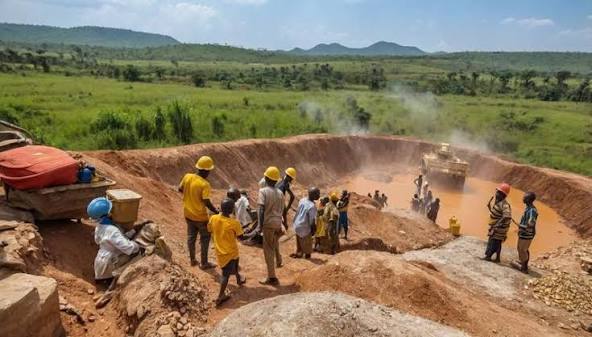
Uganda has extended the suspension of issuing new mineral licences by three months as government moves to reform the mining sector, increase domestic mineral processing and ensure the country’s mineral wealth contributes more directly to industrialisation and economic growth.
The extension, announced by the Ministry of Energy and Mineral Development on October 27, 2026, gives the ministry additional time to finalise and operationalise a proposed Strategic Mineral Licensing by Design framework.
The suspension follows an initial one-month freeze announced on August 28, 2026, to allow government to review the existing mineral licensing system and align it with national development priorities.
According to the ministry, the review established the need to move away from an application-driven licensing system towards a strategic approach in which mineral rights are granted based on their contribution to Uganda’s industrialisation and economic transformation.
Government targets value addition
Under the proposed framework, government intends to encourage the export of minerals at the highest level of value addition that can realistically be achieved within Uganda.
Processing requirements would progressively increase as the country develops the industrial capacity, technology, infrastructure and expertise needed to beneficiate its mineral resources.
The approach is intended to reduce dependence on exports of raw or minimally processed minerals while creating opportunities for domestic manufacturers, mineral processors, logistics companies and other businesses along the mining value chain.
Increased local processing could also stimulate demand for skilled labour, industrial equipment and electricity, while creating opportunities for Ugandan enterprises to participate more actively in mining-related industries.
However, the success of the proposed reforms will depend on access to reliable electricity, affordable financing, appropriate technology and infrastructure to make mineral processing commercially viable.
New licensing rules proposed
The proposed framework is built around 10 guiding principles intended to strengthen strategic planning, scientific evaluation, institutional accountability and transparency in the award of mineral rights.
The ministry plans to establish clearer licensing criteria and publish licensing decisions, together with the reasons behind them, subject to applicable legal protections.
The proposed system would also separate licensing administration, technical evaluation, integrity reviews and final decision-making into distinct institutional processes to strengthen oversight and reduce excessive individual discretion.
A proposed Minerals Industrialisation Scientific and Economic Committee would provide technical advice to ensure licensing decisions are informed by scientific and economic evidence. Administrative review and dispute-resolution mechanisms would also be established to address concerns arising from licensing decisions.
Under the reforms, commitments made by investors on domestic processing, value addition, local content and industrial development would become enforceable licence conditions, backed by appropriate financial assurances.
Mineral rights holders would be monitored against their approved development commitments, with sanctions proposed for persistent non-compliance.
The framework also envisages proportionate licensing requirements that take into account the scale and strategic importance of mining operations, including arrangements suited to artisanal and small-scale miners.
Investors await further guidance
During the three-month extension, the ministry plans to conduct stakeholder consultations, develop operational procedures, strengthen institutional safeguards and pursue the legal and regulatory arrangements required to implement the proposed framework.
The reforms are aligned with the Mining and Minerals Act, 2022, the Mining and Mineral Policy, 2018, the Fourth National Development Plan and government’s Tenfold Growth Strategy.
For prospective investors, the revised framework could provide clearer expectations regarding mineral development, local processing and compliance with licence conditions.
However, companies seeking new mineral licences will have to await further guidance from the ministry while the suspension remains in force.
The broader objective is to attract responsible investment while ensuring mineral resources generate greater domestic value through employment creation, technological advancement, local enterprise development and industrial growth.
The outcome of the reform process will be significant for Uganda’s mining sector as government seeks to balance attracting investment with its ambition to build domestic processing capacity and retain a greater share of the economic benefits generated by its mineral resources.