UNEB reports improved performance as 99.7% qualify for UCE Certificate
A total of 432,163 candidates from 3,975 examination centres registered for the 2025 UCE examinations, an increase of 72,746 candidates (20.2 percent) compared to 2024.

The Uganda National Examinations Board (UNEB) has announced improved performance in the 2025 Uganda Certificate of Education (UCE) examinations, with 99.69 percent of candidates qualifying for the award of the certificate.
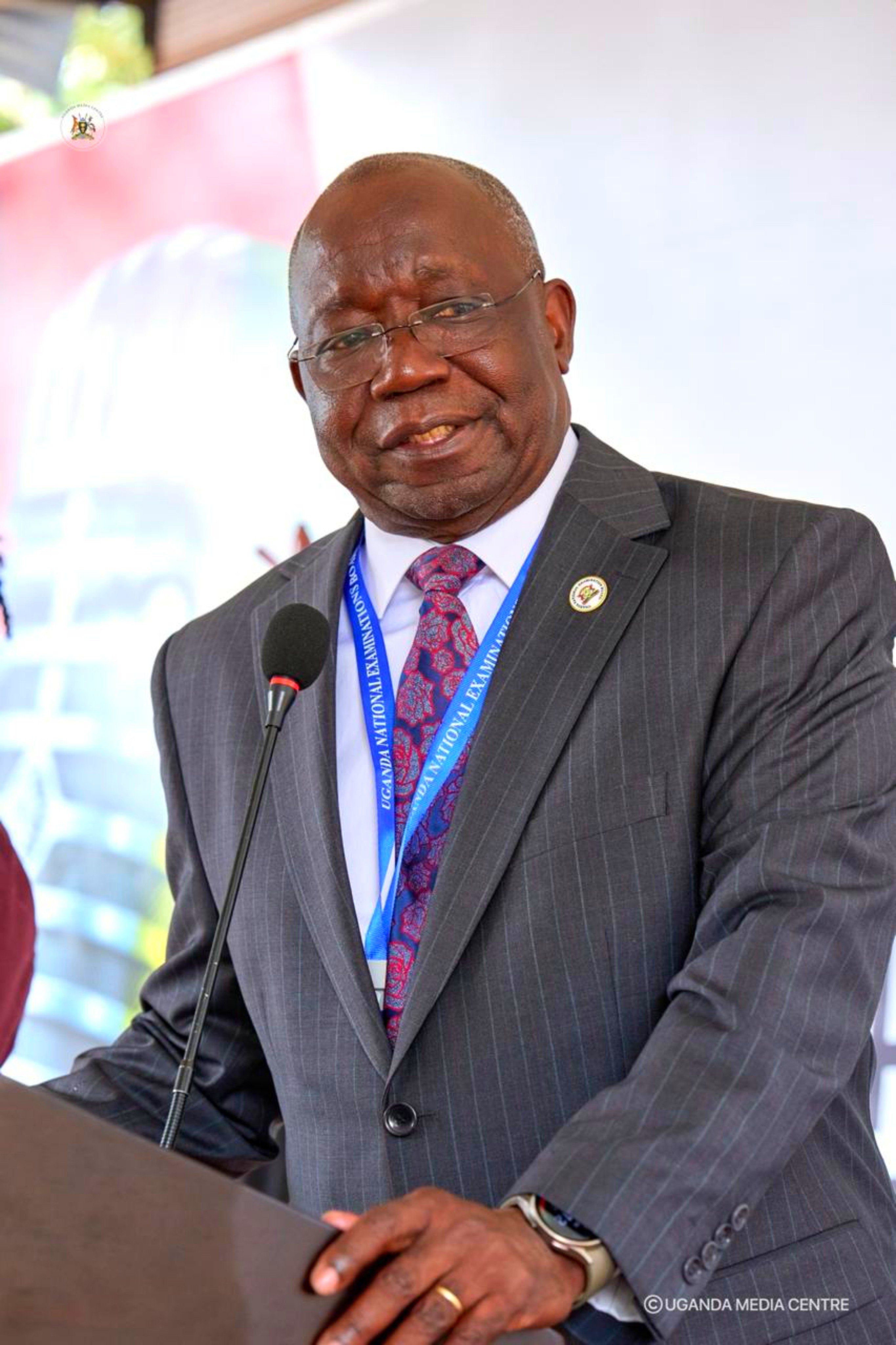
Releasing the results on February 13, 2026, UNEB Executive Director Dan N. Odongo said the examination was successfully conducted under the theme “Embracing security and holistic assessment of learners in a dynamic environment.” The 2025 candidates form the second cohort assessed under the Competency-Based Curriculum (CBC).
Surge in Candidature
A total of 432,163 candidates from 3,975 examination centres registered for the 2025 UCE examinations, an increase of 72,746 candidates (20.2 percent) compared to 2024.
Of these, 204,292 (47.3 percent) were male and 227,871 (52.7 percent) female. Candidates benefiting from the Universal Secondary Education (USE) programme accounted for 35.8 percent, while 64.2 percent were non-USE students.
UNEB reported that 429,949 candidates (99.5 percent) sat the examinations, with absenteeism dropping to 0.5 percent, continuing a downward trend observed in recent years.
Performance Trends under Competency-Based Assessment
Under the CBC framework, performance is graded according to achievement levels – A (Exceptional), B (Outstanding), C (Satisfactory), D (Basic), and E (Elementary). Final grades combine Continuous Assessment (20 percent) and End-of-Cycle examination scores (80 percent).
The results indicate significant improvement over 2024. A total of 428,628 candidates qualified for the UCE certificate (Result 1), up from 98.1 percent qualification last year. Only 0.31 percent did not meet certification requirements, a sharp drop from 1.9 percent in 2024.
The majority of candidates attained Grade C (Satisfactory), reflecting what UNEB described as a generally fair and balanced assessment aligned with curriculum expectations.
Stronger Showing in Sciences
Performance improved notably across science subjects. The proportion of candidates scoring below the basic level dropped significantly in Mathematics, Physics, Chemistry, and Biology.
However, UNEB flagged persistent challenges in practical science papers. Examiners reported that some learners struggled to interpret examination scenarios, connect experimental materials to real-life situations, and draw meaningful conclusions from their investigations, competencies central to the CBC philosophy.
“The curriculum is not merely about learning facts, but emphasizes training of the mind to think,” the statement noted, urging teachers to strengthen learners’ creative thinking and problem-solving skills.
Gender Performance Patterns
Female candidates outperformed their male counterparts in English Language and Christian Religious Education, particularly at the higher achievement levels.
In other subjects, including Mathematics, Sciences, History and Political Education, Geography, and Agriculture, performance between male and female candidates was largely comparable, with slight variations at the exceptional and outstanding levels.
Special Needs and Prison Candidates Excel
UNEB registered 708 Special Needs Education (SNE) candidates, including learners who are blind, deaf, dyslexic, physically handicapped, and others requiring extra time due to medical or circumstantial conditions. The Board provided modified papers, Braille materials, sign language interpreters, enlarged print scripts, and additional time allowances.
Of these, 98.2 percent qualified for the UCE certificate.
In a remarkable achievement, all candidates from Uganda Government Upper Prison School, Luzira, and Mbarara Main Prison Inmates’ Secondary School who sat the examinations qualified for certification—highlighting the expanding reach of education opportunities, even within correctional facilities.
Candidate Feedback: Fair but Demanding
A post-examination survey of 36,546 candidates across 118 districts found that:
- 96.3 percent said examination items were within the syllabus;
- 74.7 percent found the time allocated adequate;
- 88.2 percent said questions were clearly presented;
- 66.4 percent described the examination as fair, while 28.8 percent considered it difficult.
Only 4.7 percent described the examination as easy.
The feedback, UNEB said, aligns with the overall distribution of results, where most candidates attained the “Satisfactory” competency level.
Minimal Malpractice Cases
UNEB reported only 63 cases of examination malpractice, mainly in Mathematics and science practical papers. Some incidents involved candidates allegedly being given experimental results by teachers to copy. The Board noted that the scenario-based design of CBC assessments makes malpractice more difficult to execute.
Accessing Results
Results have been uploaded to examination centre portals for download. Parents and candidates can also access results via SMS by typing:
UCE Full Index Number and sending to 6600 on MTN or Airtel networks.
Heads of centres have 21 working days to submit any queries through the UNEB portal.
A Curriculum in Transition
The 2025 UCE results mark another milestone in Uganda’s transition to competency-based assessment at lower secondary level. While performance indicators show measurable gains, UNEB’s emphasis on creative application of knowledge signals that the reform journey is still unfolding.
For policymakers, teachers, and learners alike, the message is clear: success under the CBC will depend not just on mastering content; but on demonstrating the ability to apply it meaningfully in real-life contexts.